FRANCE: Six ways Carrefour is driving growth | Progresiv
IGD analysts have visited stores in France and Spain to see how the retailer's strategy in-store is changing. On recent visits in France in particular, but also in Spain, they noticed a real focus on highlighting local products. In Carrefour Market in Annemasse, we witnessed a great celebration of local specialities. In the Lille hypermarket we visited this week that was taken even further, with a sizeable dedicated zone for local lines across multiple categories. 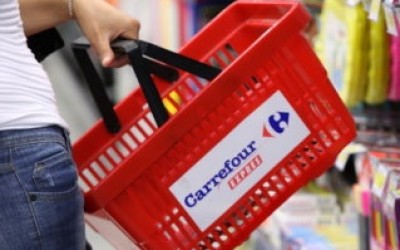
Being proud of its hypermarket store format
The Carrefour Lille store is a great example of a hypermarket that integrates food and non-food within the same overall proposition, rather than treating them as two very separate zones. This is an interesting move, at first unnerving, as on entry you are not sure if you are in the food area or non-food area, but it develops nicely as you move around the store, with effective sight lines enabling shoppers to see what they want to get to. It's not about trying to diminish the hypermarket shop to a smaller, quicker, shopping trip, but rather about celebrating it, and reinforcing the benefits of the overall mission.
Competing head-on with discount in French hypermarkets
Lower prices have been a key feature of Carrefour's recent improvements. Communication around "le prix plus bas" ('the lowest price') was evident throughout the Lille store, both on shelf edge and on hanging signage. On top of this, the dedicated discount zone, populated with third party value brands, including ambient, chilled and frozen lines, is an interesting approach. By contrast, though offers were prominent in the Madrid hypermarket we visited, there was less broader price communication and no discount zone.
Flexing its format around the lives its shoppers lead


Again in Lille, some nice features around the store stood out. A 'bon app' zone, for shoppers to snack in-store, on-the-go, was enticing. A distinct book zone, complete with seats for browsing, also stood out. And a focus on celebrating specialty cuisines, notably Spanish and Italian, made it easy for shoppers to start thinking about how to plan a themed special occasion. Also, organic, halal and Asian food selections, nicely pairing ambient and chilled ranges, were also clearly designed with the shopper in mind.
Emphasising its multichannel connections and capability
Elements of this were displayed in our French visits, but this came through most strongly in the hypermarket in Madrid, where services and online ordering (whether it be for the broader offer or speciality ranges in areas such as wine) were promoted prominently.
Driving frequency for smaller stores
In both Carrefour Markets we visited in France, there was a strong focus around inspiring more frequent repeat visits, with savings on different departments at different times of the week. In what are often very competitive catchments, where shoppers have multiple choices, we see this as a nice way to deepen engagement with shoppers and provide more reasons for visiting more often.
What's next?
Trading remains challenging for Carrefour in many markets, with the integration of DIA in France set to provide both opportunities and challenges for the retailer in 2015. Although integrating DIA will provide it with an opportunity to grow its presence in key urban areas, especially Paris, improving sales densities will require sustained investment. The retailer will be hoping that the boost that DIA's integration can provide will not hit its recent performance in the country, where it generated total sales growth of 7.9% in its first quarter, aided by a strong showing at its hypermarkets, where like-for-like sales rose 2.1%. However, by expanding the strategies we have seen in these two key European countries for Carrefour across a growing number of stores in each, then it is likely that its recent upturn in performance can be maintained, by spotlighting value, highlighting relevance and widening choice for shoppers. (www.retailanalysis.igd.com)